
Digital governance in higher education: the Cambridge approach
A strong digital governance strategy is essential to helping universities effectively manage their growing web estates


As universities continue to modernise by adopting new digital tools and platforms, effective digital governance is essential to maintaining an effective and consistent web presence. A THE webinar on the topic brought together a panel of experts to discuss the significance of institution-wide engagement and the challenges of balancing innovation with consistency.
The webinar discussion highlighted the digital governance strategy and initiatives the University of Cambridge is undertaking in partnership with Pantheon and Zoocha to optimise its web infrastructure spanning more than 2,000 websites. With over 12,000 staff members and hundreds of faculties and colleges – each seeking to carve out their own identity and pursue different approaches to innovation – ensuring a consistent brand across the university becomes a complex challenge. This also places a heavy burden on IT and development teams that support and maintain its sprawling digital estate.

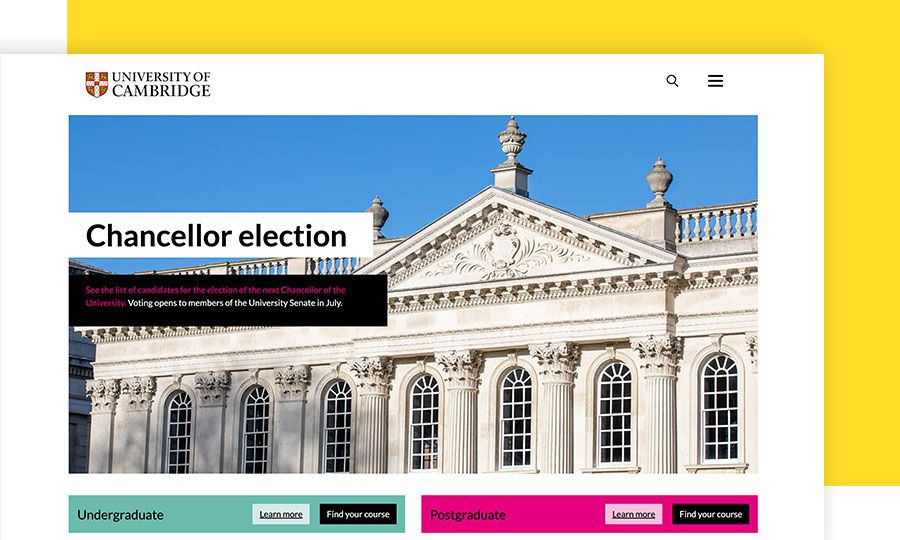
“If you’re trying to get the brightest minds to come and study at a place like the University of Cambridge, you need to be where those minds are,” said Barney Brown, head of digital communications at the University of Cambridge. “Designing the optimal user journey for somebody who wants to apply to study here is certainly where we want to get to by having more centralised approaches. We can have ways of measuring that journey more effectively and incrementally improve it.”
Many higher education institutions are striving to innovate while navigating a difficult financial landscape. The panellists discussed how open-source solutions can help institutions address this challenge. In particular, Drupal stands out from other content management systems by allowing institutions to create a structure where they have central control but devolved publishing workflows.






“You don’t build your house on rented land, and the web is the place where you can own the experience,” said Josh Koenig, co-founder and senior vice-president of marketing at Pantheon, speaking about the advantages of open source over proprietary solutions. As a website operations platform, Pantheon helps higher education institutions meet the needs of their stakeholders through consistent, scalable and secure digital experiences.
Will Huggins, CEO of Zoocha, a specialist Drupal agency, outlined two key areas where open-source tools respond to the specific needs of higher education institutions. “Being open source and free from commercial licenses doesn’t mean there’s no cost to it,” said Huggins. “What it does mean is that you’re much more in control of how you want to guide the budgets and how you want those costs to be directly associated with the outcomes that you’re trying to achieve.”






Another benefit is the flexibility and autonomy Drupal offers. “By building your technology stack using open-source components, you’re freeing yourself from some of the vendor tie-ins and lock-ins that might restrict your ability to scale, adapt and change course. That has a lot of resonance with the needs of universities,” Huggins said.
As digital platforms serve diverse stakeholders, engaging with users and understanding their needs is crucial. “We’re in an era where, for a large-scale organisation to operate in the most effective way, you have to empower everyone in the campus community to be able to own their piece of the digital terrain,” said Koenig. “That becomes challenging when you have so many stakeholders to serve. The solutions that historically have been implemented for this were very complex and hard to use, so the people who are trying to craft the message, communicate or publish their own research end up being disempowered and out of the loop,” he added.


It’s important to introduce governance models that reduce friction for teams and minimise barriers, Huggins said. Good governance strategies should enable users to be innovative and imaginative with the content they produce while making sure that it is consistent, accessible and fits into the overall journey and structure of the organisation.
“We want to have a strategy that the university can adopt for an even more mature approach to digital governance,” said Brown. This means engaging different teams such as content designers, user experience experts and heads of institutions, but also senior leaders in the university, he concluded.
The panel
● Barney Brown, head of digital communications, University of Cambridge
● Will Huggins, CEO, Zoocha
● Josh Koenig, co-founder and senior vice-president of marketing, Pantheon
● Sreethu Sajeev, branded content deputy editor, Times Higher Education (chair)
Find out more about Pantheon and Zoocha.

 Built with Shorthand